
Introduction
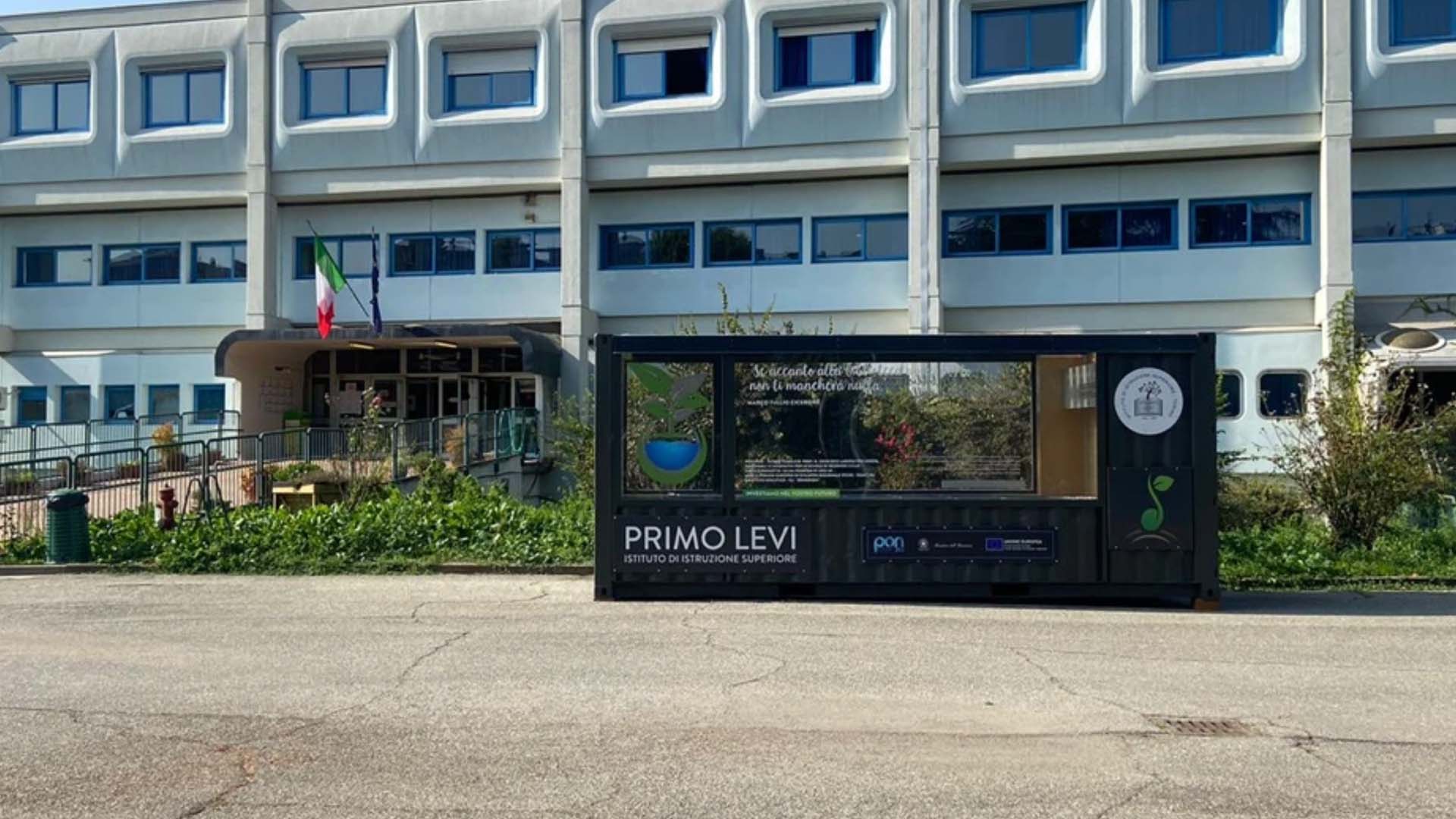
At the IIS Primo Levi Institute in Turin, an aeroponic greenhouse has been created that is much more than a laboratory: it is an inclusive educational experience. A group of students, including those with special educational needs (SEN), actively participated in managing the greenhouse, learning to care for the plants and the technological system that supports them.
need
The institute wanted to create a project that combined agriculture, technology, and inclusion, offering a concrete and motivating activity for students with diverse educational needs. The goal was to stimulate hands-on skills, teamwork, and responsibility through a practical and engaging educational environment.
solution
The aeroponic greenhouse installed at IIS Primo Levi has been transformed into an inclusive multidisciplinary laboratory. The students involved actively participated in all phases of the cultivation cycle.
results
The activity enabled direct involvement of students with vulnerabilities, strengthening self-esteem, motivation, and school participation.
The greenhouse laboratory at IIS Primo Levi has had a positive impact on multiple levels:
- It has enhanced experiential and cross-curricular learning;
- It has facilitated school inclusion, giving space and an active role to all students;
- It has enabled students to concretely experience concepts of biology, sustainability, and technology;
- It has brought positive visibility to the school as an example of innovative and inclusive education.
A greenhouse that produces not only plants, but personal growth, relationships, and awareness.
other projects
In Sozzago (NO), an indoor facility transforms a former cold storage room into a sustainable production hub
In 2024, PUM RUS installed an indoor facility producing over 24,000 units per year, transforming a former cold storage room into a production space for live vegetables destined for the restaurant, direct sales, and the HoReCa channel.
A Sozzago (NO), un impianto indoor trasforma un’ex cella frigo in un hub produttivo sostenibile
Nel 2024 PUM RUS ha installato un impianto indoor da oltre 24.000 prodotti l’anno, trasformando un’ex cella frigo in uno spazio produttivo per ortaggi vivi destinati a ristorante, vendita diretta e canale HoReCa.
Carrefour porta la produzione a chilometro zero davanti al punto vendita
Dal 2023 al 2025 un modulo Hortus davanti al Carrefour Market di Piazzale Siena ha permesso di coltivare e vendere prodotti a chilometro zero, unendo sostenibilità e retail.